|
|
|
|
This issue looks at the boundaries of perception and measurement. We consider how the brain responds to what it can and cannot hear, how it synchronizes with musical rhythm, and how personal history appears in neural network activity. From the difference between the urge to tap to a song and the desire to dance, we turn to the methods for clarifying what we observe—whether using an algorithm to sharpen a medical image or standardizing the tools used to assess patterns of thought.
|
|
|
|
Can an AI sharpen blurry head scans without creating false details?
|
|
|
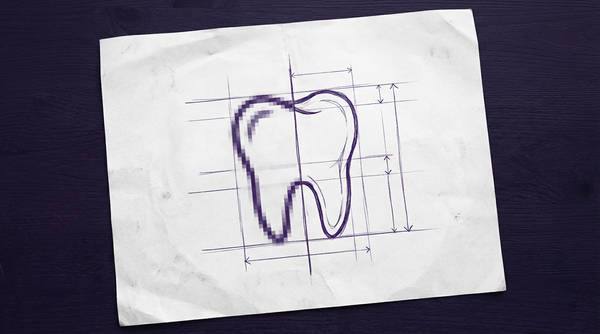
Fine structures in the head and face, such as bone texture and root canals, are poorly resolved in large cone-beam CT scans. Researchers developed an artificial intelligence method using scans from one human skull, four cadaveric human heads, and six sheep heads to recover fine image details.
|
|
Hosseinitabatabaei, S., Nelson, A. J., Piché, N., Dagdeviren, D., & Reznikov, N. (2026). Craniofacial CBCT: Addressing volume-resolution dilemma using generative artificial intelligence. Bone, 207, 117841. https://doi.org/10.1016/j.bone.2026.117841
 Andrew Nelson Andrew Nelson
|
|
|
|
|
Does childhood trauma alter brain network adaptation, affecting working memory in schizophrenia?
|
|
|
This study investigated whether childhood trauma relates to altered brain network flexibility and working memory in people with schizophrenia. Researchers enrolled patients with schizophrenia and healthy controls, using functional magnetic resonance imaging during a working memory task for a subset of participants.
|
|
Huang, D., Liu, Z., Tan, W., Sopodenkiewicz, M., Liu, X., Yang, J., Wang, F., Huang, W., Yang, J., Long, Y., & Palaniyappan, L. (2026). Dynamic frontoparietal flexibility and cognitive dysfunction in schizophrenia: disentangling the roles of symptom burden and childhood trauma. Psychological Medicine, 56. https://doi.org/10.1017/s0033291726103869
Lena Palaniyappan
|
|
|
|
|
Do different tests for disordered thought measure the same symptoms?
|
|
|
The measurement of formal thought disorder in psychosis is fragmented across many different rating scales, making it difficult to compare research and clinical work. Researchers conducted a systematic review of these scales and mapped their individual items to a consensus list of phenomena to quantify their content overlap.
|
|
Sreeraj, V. S., Voppel, A., Venkatasubramanian, G., & Palaniyappan, L. (2026). What is being measured by formal thought disorder scales? An item-level content analysis. Psychological Medicine, 56. https://doi.org/10.1017/s0033291726104152
Lena Palaniyappan
|
|
|
|
|
How do sounds we can't hear in nature change our mood and focus?
|
|
|
It is not known if inaudible ultrasound frequencies in soundscapes influence the psychological restoration associated with listening to nature. Researchers conducted a trial comparing nature and urban soundscapes, both with and without ultrasound, to measure effects on participants' cognitive performance, mental fatigue, affect, and perceived restoration.
|
|
Cotton, A., Van Hedger, S. C., Macpherson, E. A., & Grahn, J. A. (2026). Welcome to the jungle: Aesthetic preference mediates soundscape evaluation, with limited effects of ultrasound exposure. Journal of Environmental Psychology, 110, 102966. https://doi.org/10.1016/j.jenvp.2026.102966
Jessica Grahn
Stephen Van Hedger
|
|
|
|
|
Does the brain sync with a musical beat because of the rhythm or just because it is familiar?
|
|
|
Researchers question whether the brain's synchronization to a musical beat is a direct response to the rhythm or an effect of being familiar with beat-based music. To separate these factors, they recorded participants' EEG responses to a set of rhythms, trained the participants on half of the rhythms to make them familiar, and then recorded their EEG responses to the full set again.
|
|
Hoddinott, J. D., Henry, M. J., & Grahn, J. A. (2026). Experience-driven Predictability Does Not Influence Neural Entrainment to the Beat. Journal of Cognitive Neuroscience, 38(2), 406-421. https://doi.org/10.1162/jocn.a.95
Jessica Grahn
|
|
|
|
|
Does the desire to tap to a song differ from the desire to dance to it?
|
|
|
The pleasurable urge to move to music, called groove, is measured using ratings, but it is not known whether scores are affected by the specific type of movement being rated. Researchers conducted studies in which participants rated unfamiliar songs on their elicited desire to tap, desire to move, and desire to dance.
|
|
Sidhu, R. K., & Grahn, J. A. (2026). Tap, Move, or Dance? How Groove Ratings Differ Across Movement Descriptors. Music Perception: An Interdisciplinary Journal, 43(4), 327-338. https://doi.org/10.1525/mp.2025.2466347
Jessica Grahn
|
|
|
|
|
|
|
|
|
|
|
|
|

Complex Adaptive Systems (CAS) Lab
Western University
1151 Richmond Street, London, Ontario N6A 3K7, CA
caslab@uwo.ca
|
|
|
|