|
|
|
|
Welcome to At the Intersections. This week, we examine how analytical methods are applied to systems that shape daily life, from forecasting housing prices to reorganizing hospital logistics. The issue also considers mental health from several perspectives: the role of art creation for mothers with histories of intimate partner violence, the exclusion of people with thought disorder from clinical research, and the management of risks associated with human-AI engagement.
|
|
|
|
What best predicts house prices?
|
|
|
Changes in house prices affect individual well-being and the broader economy, making their prediction a crucial task for households, policymakers, and investors. To forecast Canadian house price indices, researchers introduced new multi-layer hybrid machine learning models and applied them to a 34-year dataset from twelve major Canadian cities.
|
|
Zahid, I., Algieri, B., Leccadito, A., & Mamon, R. (2026). Modelling and predicting house price indices in Canada via a hybridisation of machine learning methods. Journal of Housing and the Built Environment. https://doi.org/10.1007/s10901-025-10264-4
 Rogemar Mamon Rogemar Mamon
|
|
|
|
|
Can a just-in-time approach to preparing surgical supplies reduce costs, contamination, and congestion?
|
|
|
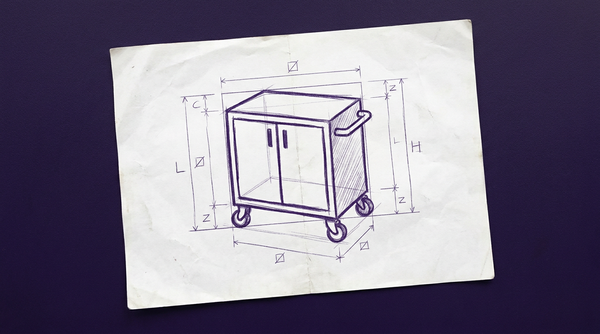
Preparing surgical case carts can create inefficiencies in hospital logistics. To address this, researchers selected a new design using simulation and data envelopment analysis.
|
|
Borzée, J., Verniers, I., Begen, M. A., & Cardoen, B. (2026). Just-in-Time Surgical Case Carts to Improve Operating Room Efficiency. INFORMS Journal on Applied Analytics. https://doi.org/10.1287/inte.2025.0243
Mehmet Begen
|
|
|
|
|
Can making and sharing art help mothers with a history of partner violence see themselves differently?
|

|
|
This research examined the feasibility of an art-based program for mothers in Canada with histories of intimate partner violence. To study this, researchers led participants through weekly group art sessions and a community art show, and then conducted interviews with the mothers.
|
|
Yates, J., Jackson, K. T., O’Keefe-McCarthy, S., Sek, J., Lundy, T., & Mantler, T. (2026). Empowered by Art: Artwork Creation as a Mental Health Promoting Intervention for Mothers in Canada With Histories of Intimate Partner Violence. Canadian Journal of Art Therapy, 1-13. https://doi.org/10.1080/26907240.2026.2612838
Tara Mantler
|
|
|
|
|
Why are people with thought disorder often left out of the research that is meant to help them?
|
|
|
People with thought disorder are systematically underrepresented in psychiatric research, which hinders therapeutic progress for this condition. This review examines how flawed assumptions about capacity, engagement, and participatory abilities serve as active barriers to inclusion.
|
|
Palaniyappan, L., Baillet, S., Bambini, V., Barou-Laforie, E., Bosia, M., Delgaram-Nejad, O., Ganesh, H., Garani, R., Harrison, N., Hodgins, V., Joober, R., Kuperberg, G., Kircher, T., Murthy, C., Rossell, S., Singh, K. D., Sommer, I. E., Tang, S. X., Titone, D., ... Voppel, A. (2026). Increasing Participation of People with Thought Disorder in Clinical Research. European Psychiatry, 1-36. https://doi.org/10.1192/j.eurpsy.2026.12211
Lena Palaniyappan
|
|
|
|
|
Can talking to an AI contribute to disordered thinking?
|

|
|
The widespread adoption of conversational artificial intelligence presents a new psychosocial risk for mental illness, especially for adolescents and young adults, yet there is a scarcity of evidence on clinical management. To address this, the researchers provide a primer to help psychiatrists identify patients at risk and formulate management principles based on other phenomenologically similar states.
|
|
Palaniyappan, L., Paquin, V., & Barou-Laforie, E. (2026). High-Risk Human–AI Engagement: Clinical Assessment and Management Considerations. The Canadian Journal of Psychiatry. https://doi.org/10.1177/07067437261445770
Lena Palaniyappan
|
|
|
|
|
|
|
|
|
|
|
|
|

Complex Adaptive Systems (CAS) Lab
Western University
1151 Richmond Street, London, Ontario N6A 3K7, CA
caslab@uwo.ca
|
|
|
|