|
|
|
|
Welcome to At the Intersections. This week, we examine the use of modeling to understand connections between our environment, actions, and well-being. We feature work that projects the financial outcomes of weather and the health consequences of workplace structure. Other pieces refine medical knowledge by assessing treatment safety during pregnancy, clarifying prevention strategies for specific populations of women, and tracing the effects of childhood habits. Finally, we look at a system where human expertise and artificial intelligence collaborate to process neural data.
|
|
|
|
Can an AI assistant help experts clean brainwave recordings?
|

|
|
Cleaning distorted signals from EEG brain activity recordings is a laborious and manual process for experts. This study developed a system where an AI agent assists experts to identify, label, and clean these signals in a repeating feedback loop.
|
|
Abdou, A., Ivanov, M., Shaya, S., Rueda, A., Nezhad, F. G., Demchenko, I., Kamaleddin, M. A., Frewen, P. A., Dunkley, B. T., Brady, B., Nicholson, A., Jetly, R., Sharma, D., Krishnan, S., & Bhat, V. (2026). EEG-AI: An agentic system for AI-assisted semi-automated EEG preprocessing and artifact removal. Journal of Neuroscience Methods, 432, 110759. https://doi.org/10.1016/j.jneumeth.2026.110759
 Paul Frewen Paul Frewen
|
|
|
|
|
Does treating hepatitis C during pregnancy increase risks for the developing fetus?
|

|
|
A key question for healthcare providers is whether it is safe to treat a person with hepatitis C virus during pregnancy to prevent the virus from being passed to their child. This work interprets data on maternal and fetal outcomes from a pharmacovigilance dataset and other clinical studies that tracked exposure to direct-acting antivirals.
|
|
Chappell, C., Biondi, M. J., & Kushner, T. (2026). DAAs in pregnancy are the only potential intervention to decrease vertical transmission: Pregnancy DAA data support safety. Hepatology Communications, 10(5). https://doi.org/10.1097/hc9.0000000000000924
Mia Biondi
|
|
|
|
|
What, besides hail size, determines the financial cost of a hailstorm?
|
|
|
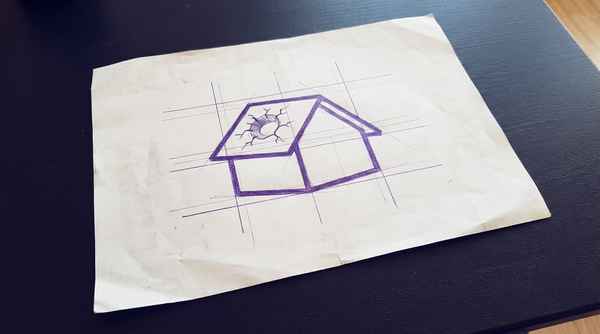
This study addresses the challenge of modeling insured financial losses caused by hailstorms. To build empirical vulnerability functions, researchers modeled loss data from three Calgary hailstorms against environmental variables like hail size and precipitation, along with socioeconomic data from the Canadian Census.
|
|
Li, Y., Roosmawati, N., Goda, K., Boodoo, S., Brimelow, J., Porter, K., & Kopp, G. A. (2026). Hail vulnerability modeling for Calgary, Canada using environmental and socioeconomic data with multivariate regression and machine learning techniques. International Journal of Disaster Risk Reduction, 139, 106153. https://doi.org/10.1016/j.ijdrr.2026.106153
Gregory Kopp
|
|
|
|
|
How many sick days could giving young employees more influence at work prevent?
|

|
|
This research estimates the potential reduction in sickness absence among young Danish employees that could result from increasing their influence at work. The researchers used register data from 301,185 individuals, assigned an average level of influence based on job title, and then simulated an increase in this factor to predict its effect on sickness absence days.
|
|
Sørensen, J. K., Mathisen, J., Pedersen, J., Burr, H., Holm, A., Lallukka, T., Melchior, M., Hulvej Rod, N., Rugulies, R., Sivertsen, B., Stansfeld, S., Christensen, K. B., & Madsen, I. E. H. (2026). Simulated Improvements in Influence at Work and Reduction in Sickness Absence Among Young Employees: A Nationwide Register-Based Study. International Journal of Public Health, 71. https://doi.org/10.3389/ijph.2026.1609400
anders holm
|
|
|
|
|
Does the age you start gaming predict later gaming problems?
|

|
|
It is unclear whether the age at which a person starts playing video games frequently is connected to the severity of later problematic gaming symptoms. To investigate this, researchers used modeling to identify how different patterns of frequent gaming during early life relate to problematic gaming in adults.
|
|
Compton, S. A. H., Tremblay, P. F., Osuch, E. A., & Mitchell, D. G. V. (2026). Is early childhood exposure a key predictor of adulthood problematic gaming?. PLOS One, 21(5), e0348901. https://doi.org/10.1371/journal.pone.0348901
Paul Tremblay
|
|
|
|
|
How do post-exposure HIV prevention strategies for cis and trans women differ?
|

|
|
Post-exposure HIV prevention options for cis and trans women are understudied and underutilized, even as HIV prevalence in this group is increasing. To build a clearer understanding of these methods, researchers conducted a systematic search of scholarly literature and used a concept analysis to examine 33 relevant studies.
|
|
Barnett, T., Van Uum, R., Mashhadi, P. E., Crespi, A., Tahir, H., Rana, S., Giffen, C., Buick, C. J., Fisher, K. N., Bogoch, I. I., Campbell, K. A., Haghiri-Vijeh, R., & Biondi, M. J. (2026). HIV post-exposure prophylaxis (PEP) and PEP-in-pocket (PIP) for women: A rodgers’ evolutionary concept analysis. Women's Health, 22. https://doi.org/10.1177/17455057261457909
Mia Biondi
|
|
|
|
|
Upcoming events
|
Western Complex Systems Conference
Mar 25, 2027 · 9:30 AM EDT
The purpose of the Western Complex Systems Conference is foster interdisciplinary collaboration as we explore the application of complexity theory and systems thinking across disci
RSVP →
|
|
|
|
|
Listen to our podcast
|
|
|
|
|
|
|
|
|
|
|
|

Complex Adaptive Systems (CAS) Lab
Western University
1151 Richmond Street, London, Ontario N6A 3K7, CA
caslab@uwo.ca
|
|
|
|