|
|
|
|
This week at the intersections of theory and practice, we look at the mechanics of connection. We explore how care is delivered, from mobile outreach programs for people experiencing homelessness to the availability of support for people living with a chronic lung disease, and what initial user actions on a health app suggest about future engagement. The issue then shifts focus to how we build understanding, looking at a framework for the whole of psychic life and at the physical interactions observed when a liquid droplet hits a moving surface.
|
|
|
|
How does mobile outreach connect people to care, when it's not just about the services?
|

|
|
People experiencing homelessness, substance use, and mental illness face persistent barriers to care, and it is not well understood how mobile outreach initiatives enable access to services. To study this, researchers evaluated a mobile outreach program by conducting interviews with providers, partner organizations, system leaders, and clients, and by reviewing documents.
|
|
Cristancho, S., Eby, D., Dobbyn, F., & McNab, K. (2026). Reducing friction, enabling response: a realist evaluation of a mobile outreach model for marginalized populations. openRxiv. https://doi.org/10.64898/2026.07.30.26358580
 Sayra M Cristancho Sayra M Cristancho
|
|
|
|
|
Why are there gaps in care for a common lung disease, even when many support programs are available?
|

|
|
The high rate of chronic obstructive pulmonary disease (COPD) in Southwestern Ontario has raised questions about whether available programs and resources meet the needs of people living with the condition. To investigate this, researchers collected information on COPD programs through web-searching and expert consultation to describe what is available for residents in the Middlesex-London region.
|
|
Dong, M., Sedig, K., Sui, W., Al-Azem, M., Smith, A., Anphalagan, S., & Sibbald, S. L. (2026). Uncovering chronic obstructive pulmonary disease care accessibility and gaps in Middlesex-London, Canada. Journal of Community Systems for Health, 3(1). https://doi.org/10.36368/jcsh.v3i1.1355
Shannon L. Sibbald
|
|
|
|
|
How does a trapped air bubble catch up to a moving surface?
|

|
|
This research addresses what happens to the gas film trapped underneath a liquid droplet when it hits a moving surface. The investigation was conducted using high-speed photography to observe five different liquids impacting the surface at a range of velocities.
|
|
Liu, M., Cheng, J., Nie, T., Hao, J., & Floryan, J. M. (2026). Moving contact line of a gas film trapped underneath a droplet impacting a moving surface. Physics of Fluids, 38(8). https://doi.org/10.1063/5.0341254
Jerzy M Floryan
|
|
|
|
|
How can psychiatry reconnect its data to the experience of the whole person?
|
|
|
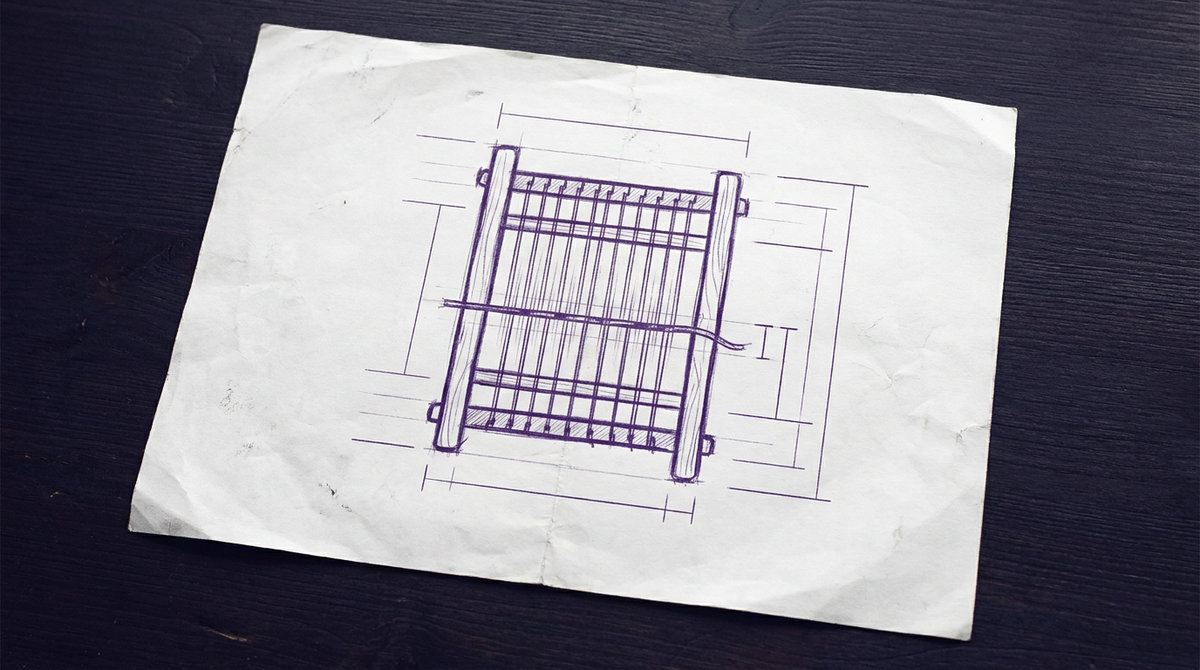
Contemporary psychiatry has generated large amounts of data but struggles to understand mental life as a coherent, lived whole. Researchers revisited Karl Jaspers’ concept of "the whole of psychic life" and proposed five guiding principles to translate the idea into a conceptual framework for modern use.
|
|
Gadelha, A., Haguiara, B., Lorencetti, P. G., Koga, G., Studart, I., & Palaniyappan, L. (2026). Operationalizing the Whole of Psychic Life: Toward a Structured Framework for Psychopathology. Psychopathology, 1-12. https://doi.org/10.1159/000552393
Lena Palaniyappan
|
|
|
|
|
Can a user's first week on a health app predict if they will subscribe?
|

|
|
The effectiveness of mobile health apps can be limited by low user engagement. To investigate this, researchers analyzed survey responses, device-assessed health data, and app usage data from users during a 7-day free trial period for a paid mHealth app.
|
|
Genaidy, Y., Hasan, R., Incitti, J., Bloom, E. L., Tremblay, P., & Mitchell, M. S. (2026). Association Between Behavioral Phenotypes and Paid Subscription and Renewal Among New mHealth App Users: A 6-Month Prospective Cohort Study (Preprint). Journal of Medical Internet Research. https://doi.org/10.2196/93691
Paul Tremblay
|
|
|
|
|
Upcoming events
|
Western Complex Systems Conference
Mar 25, 2027 · 9:30 AM EDT
The purpose of the Western Complex Systems Conference is foster interdisciplinary collaboration as we explore the application of complexity theory and systems thinking across disci
RSVP →
|
|
|
|
|
Listen to our podcast
|
|
|
|
|
|
|
|
|
|
|
|

Complex Adaptive Systems (CAS) Lab
Western University
1151 Richmond Street, London, Ontario N6A 3K7, CA
caslab@uwo.ca
|
|
|
|